
Technology and Integration for Display Manufacturing
The engines describe functional roles. Technology choices determine how those roles are implemented. DisplayCore explores the hardware, software, interfaces, and deployment considerations relevant to display manufacturing. Physical AI and Artificial Intelligence of Things (AIoT) can connect equipment identity, process measurements, operational analysis, and authorized responses, provided the underlying data and interfaces are suitable for the task.
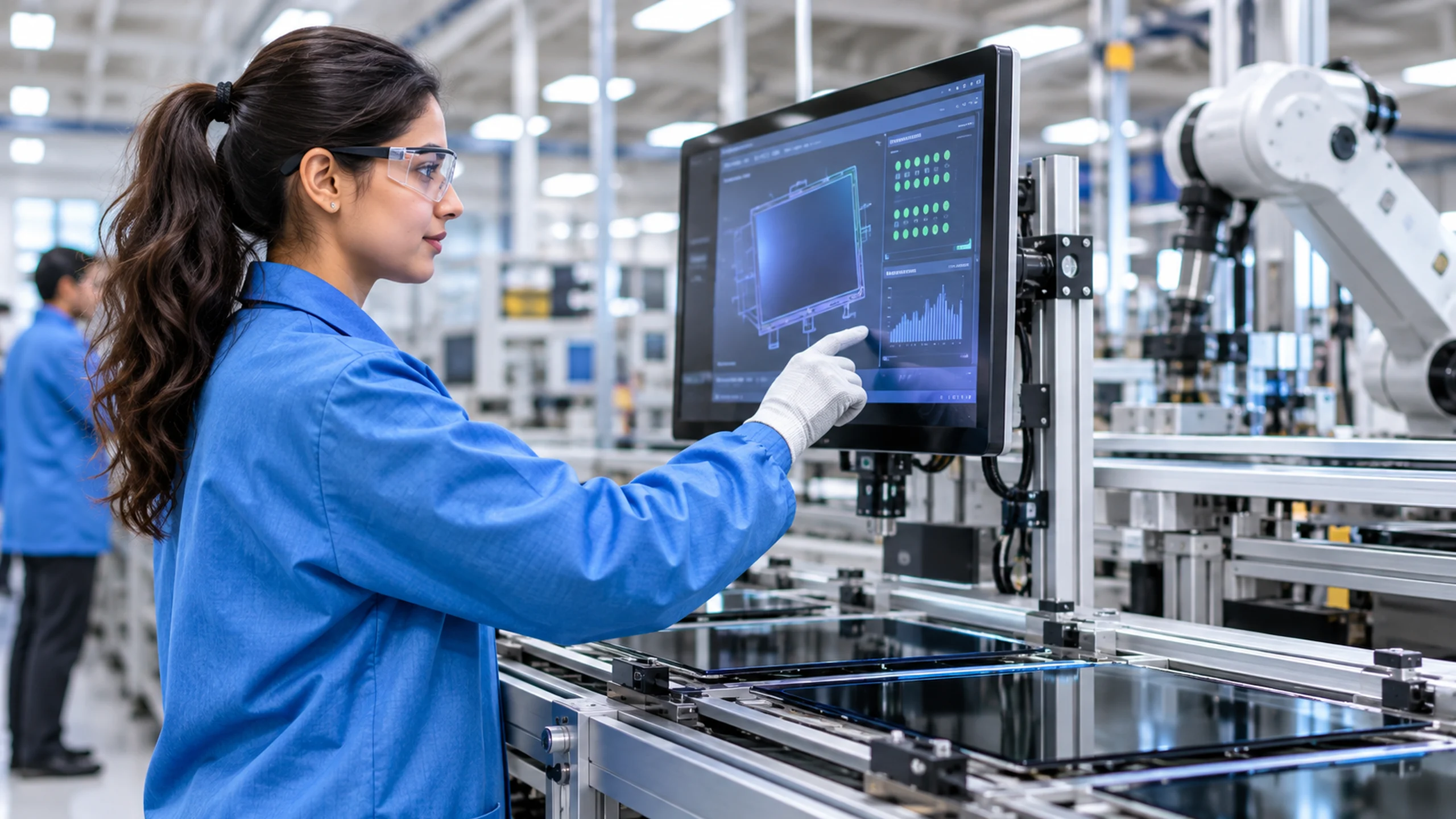
Technology Across the Display Manufacturing Workflow
Display manufacturing brings together precision equipment, material handling, inspection, process monitoring, and production information systems. A technology design should reflect the specific process boundary, equipment conditions, data sources, and responsibilities of the people who operate and maintain it.
The technology map connects functional engines with implementation components. Identification and sensing establish physical-world information. AI and software services process data and support decisions. Integration connects those outputs with operational systems, while control technologies provide a path for authorized physical responses where safeguards and verification are in place.
Technology and Integration Areas
AI Software and Analytics
Explore software approaches for preparing manufacturing data, analyzing equipment and process conditions, and supporting operational decisions. Implementation depends on representative data, clear evaluation criteria, deployment constraints, model versioning, and monitoring.
IoT Software
IoT software connects field observations with operational applications. Key considerations include device and event ingestion, timestamps, asset association, data quality, duplicate handling, device lifecycle management, dashboards, notifications, and audit records.
Identification and Sensing Hardware
Identification devices, sensors, gateways, and edge computers should be selected according to the physical environment and information required. Evaluations may consider identification coverage, measurement range, placement, calibration, power, connectivity, servicing, and maintenance access.
Physical Action and Control Technologies
Controllers, actuators, drives, and robotic or autonomous equipment can provide interfaces for physical responses. The design must distinguish advisory AI from validated equipment control and account for authority, interlocks, manual control, fault handling, communication loss, and confirmation of physical outcomes.
System Integration and Deployment
System integration connects physical observations and decision outputs with equipment and enterprise systems. Planning should address data ownership, interface contracts, deployment responsibilities, access boundaries, buffering, recovery, and acceptance testing. Evaluate edge, server, private-hosting, and cloud arrangements for the specific workflow and confirm which options are available.
Choosing Technologies for a Display Manufacturing Environment
Technology selection should begin with the operational question and the assets or process involved. Evaluate these factors before committing to a design.
- Operating environment. Consider cleanroom or production-floor conditions, temperature, vibration, electromagnetic interference, and physical access requirements as applicable to the site.
- Data requirements. Determine what must be identified or measured, at what frequency and accuracy, and with what context, such as asset ID, timestamp, operating mode, and quality flag.
- Latency and availability. Determine how quickly information is needed, what happens during network or service interruptions, and whether local processing is required.
- Connectivity and interfaces. Review available device interfaces, network arrangements, data formats, and connections to existing manufacturing or enterprise systems.
- Maintainability. Account for calibration, device replacement, software updates, troubleshooting access, lifecycle support, and maintenance responsibility.
- Integration constraints. Review data ownership, security and access boundaries, legacy equipment, interface readiness, and site-specific validation needs.
Define the System Boundary Before Implementation
A practical integration plan identifies which functions are handled by DisplayCore, which depend on third-party hardware or software, which are customer-managed, and which remain proposed or require validation. A hardware-agnostic design aims to support multiple suppliers through defined interfaces. Compatibility still needs to be confirmed for each device or system.
Before deployment, document the equipment and process scope, data sources, interfaces, responsible users, performance measures, and operating constraints. Validate each proposed connection in the target environment. Production readiness and safe physical operation require evidence beyond a software demonstration.
Explore the Technology Architecture
See how identification, sensing, decision processing, and authorized action fit together in the Physical AI and AIoT Engines Architecture ↗.
Plan Your Technology Requirements
Have a display manufacturing workflow to evaluate? Discuss the equipment, data, interfaces, and operational requirements with DisplayCore.