
Practical Guidance for Physical AI and AIoT in Display Manufacturing
Display manufacturing depends on tightly controlled processes, precise material handling, cleanroom discipline, reliable equipment, and consistent inspection. Physical AI and the Artificial Intelligence of Things (AIoT) can connect observations from production equipment, sensors, inspection systems, and factory operations with decisions that support people and physical processes. The right design depends on the display process, the equipment involved, the quality objective, and the authority assigned to each action.
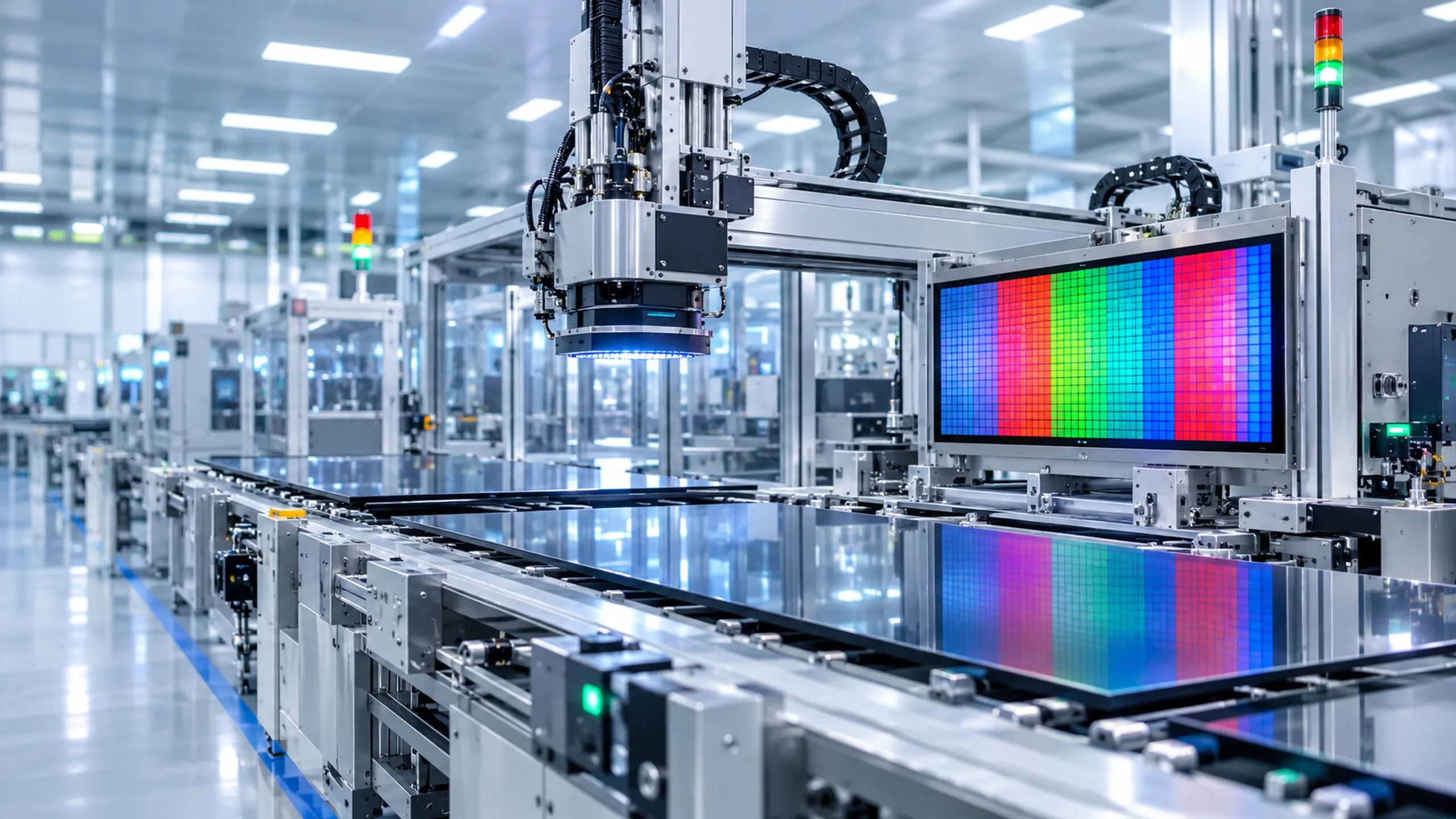
The DisplayCore Knowledge Center brings together practical guidance for engineers, operations leaders, automation teams, system integrators, and technical decision-makers. Use these resources to understand technology choices, define system requirements, and assess whether an application is ready for a controlled pilot.
Explore the Knowledge Center
Start with the operational question you need to answer. The topics below follow the path from identifying assets and collecting reliable measurements to interpreting conditions, coordinating systems, and evaluating results.
Identification and traceability
Understand how RFID, Bluetooth Low Energy (BLE), and ultra-wideband (UWB) can identify or locate materials, carriers, work-in-process, tools, and equipment. Consider read zones, metal structures, cleanroom handling, asset association, and the difference between an identity event and continuous location.
Sensing and process visibility
Review sensor selection for temperature, vibration, pressure, flow, humidity, particle conditions, machine state, and optical inspection. Account for measurement range, placement, calibration, sampling, uncertainty, contamination controls, and data quality.
AI decisions and operational context
Examine how machine data, inspection images, process history, and equipment context can inform anomaly detection, quality assessment, process monitoring, and maintenance decisions. Distinguish measured signals from derived features and model outputs.
Physical action and human oversight
Consider how recommendations or control actions interact with production equipment, material handling systems, and operator workflows. Define authorization, interlocks, safe states, exception handling, manual approval, and confirmation that an action produced the intended result.
System integration and deployment
Plan data exchange among sensors, inspection stations, manufacturing equipment, manufacturing execution systems (MES), supervisory control and data acquisition (SCADA), quality systems, and enterprise platforms. Evaluate edge, server, and cloud arrangements against latency, connectivity, cybersecurity, data governance, and support requirements.
Pilot design and evaluation
Set a measurable objective before testing. Define the process boundary, baseline workflow, operating conditions, data sources, acceptance criteria, failure cases, and review responsibilities. Separate simulation results, controlled tests, pilot evidence, and verified operational outcomes.
Find a Practical Starting Point
Operational buyers can begin by defining the production problem, the affected process, and the result that would justify further investigation. Engineers and automation specialists can start with the required measurements, equipment interfaces, data quality, and operating constraints. Implementation teams can then map system boundaries, security responsibilities, human approval points, and deployment requirements.
Featured Guides
RFID, BLE, and UWB Comparison ↗
Compare identification and location approaches for display manufacturing materials, carriers, tools, and work-in-process. Review read conditions, coverage, interference, and deployment tradeoffs.
Selecting Sensors for Display Manufacturing ↗
Choose measurements and sensor locations based on process requirements, environmental conditions, calibration needs, sampling, uncertainty, and data quality.
Designing and Evaluating a Physical AI or AIoT Pilot ↗
Define a baseline, test conditions, success measures, failure cases, and evidence requirements before committing to a production pilot.
Additional guides may address system integration, edge and cloud deployment, cybersecurity and physical action safeguards, and common Physical AI and AIoT questions.
How to Use These Resources
Use the guides to frame technical decisions and prepare for site-specific engineering review. Display fabs differ in process technology, substrate and panel formats, equipment configuration, cleanroom classification, material flow, inspection requirements, and production controls. Validate assumptions against the actual facility and equipment documentation before selecting sensors, integrating systems, or authorizing physical actions.
Where a guide discusses a proposed design, illustrative scenario, or simulated result, that status should be clearly identified. A deployed capability or customer outcome requires evidence from the actual implementation. Technical claims should be supported by authoritative references and reviewed by a qualified subject-matter expert.
Discuss a Display Manufacturing Application
If you are evaluating Physical AI or AIoT for display production, inspection, equipment monitoring, material tracking, or factory integration, contact DisplayCore to discuss the process, operating constraints, and evidence needed to assess a suitable next step.