
AI Models That Turn Fab Floor Events Into Operational Decisions
Personnel monitoring, access governance, asset intelligence, inventory forecasting, and traceability for TFT array, cell, and module lines
Contact Us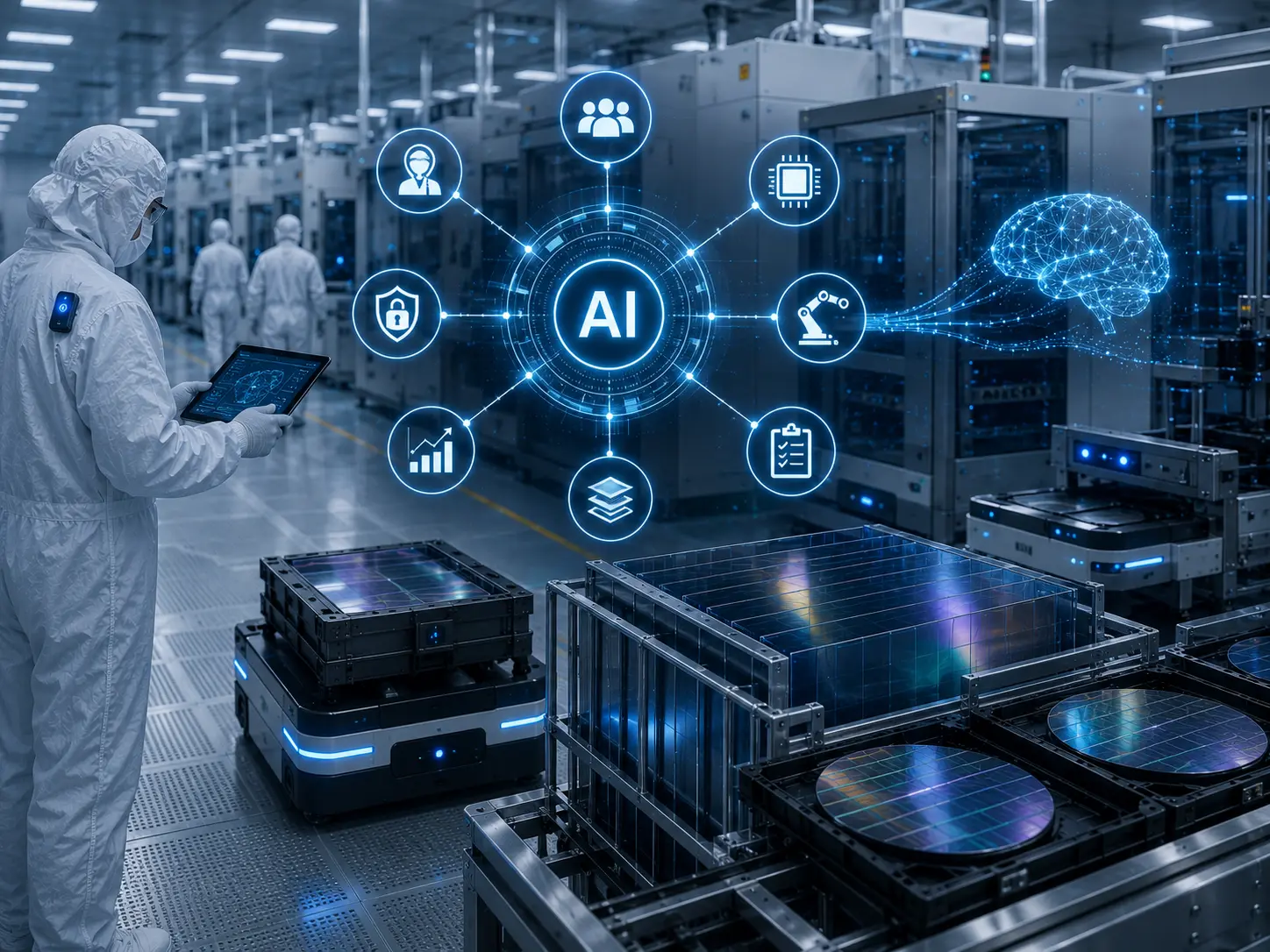
Overview
A display fab generates a continuous stream of location and event data across cleanrooms, panel lines, and equipment bays. Raw data alone does not tell an operations team where risk is building or where a process deviation is likely to affect yield. DisplayCore AI applies machine learning models to this stream to surface the patterns that matter, converting badge reads, RFID scans, and sensor readings into decisions that personnel, quality, and facilities teams can act on before a problem escalates into a line stoppage or a yield excursion.
The five function areas below cover the operational scope of AI-driven tracking and control for LCD and OLED manufacturing: personnel tracking, access governance, asset intelligence, inventory optimization, and WIP traceability. Each is designed around the specific process flow of TFT array fabrication, color filter processing, cell assembly, and module integration rather than a generic factory floor model.
Personnel Tracking Intelligence
Cleanroom staffing decisions in a display fab carry direct consequences for particulate control, ESD compliance, and process bay throughput. AI-driven personnel tracking gives facilities and operations teams a continuous, verifiable picture of where workers are and how they move through the fab.
AI-driven worker location monitoring in display fabs
Continuous position tracking of gowned personnel across TFT array, cell, and module process areas, giving supervisors real-time visibility without relying on manual headcounts.
Workforce density analytics for cleanroom environments
Automated flagging when a bay, airlock, or process zone exceeds its rated occupancy, supporting both contamination control and safety compliance.
Shift attendance prediction & anomaly detection
Machine learning models that establish expected attendance patterns by shift and role, then flag irregular clock-in behavior or unexpected absences before they affect line staffing.
AI-based personnel flow optimization across panel lines
Routing and scheduling recommendations that reduce unnecessary cross-traffic between process bays, lowering cross-contamination risk between incompatible process steps.
Intelligent Access Governance
Cleanroom access control in display manufacturing has to account for role, certification, and process-specific risk, not just a badge match at a door. DisplayCore AI applies decision models on top of standard access hardware to make entry authorization both faster and more precise.
AI-powered cleanroom entry authorization
Real-time evaluation of entry requests against role, shift assignment, and gowning certification before granting access to a controlled area.
Role-based AI access decision engine for display fabs
Policy logic that adjusts access permissions dynamically as personnel change roles, projects, or certifications, reducing manual access list maintenance.
Tailgating detection & unauthorized zone alerting
Identification of multiple entries on a single credential at airlocks and controlled doors, with immediate alerting to security and facilities staff.
AI compliance monitoring for ESD-sensitive areas
Continuous verification that personnel entering deposition, etch, or other ESD-controlled bays meet grounding, gowning, and certification requirements before and during their time in the zone.
Display Asset Intelligence
Reticles, photomasks, and production tooling represent some of the highest-value assets in a display fab, and their location and condition directly affect production continuity. AI asset intelligence extends tracking beyond simple location to include utilization forecasting and failure prediction.
AI-based reticle & photomask location analytics
Precise, cassette-level location tracking for reticles and photomasks as they move between storage, staging, and exposure tools.
Production equipment utilization forecasting
Predictive models that anticipate when key tools are approaching capacity, supporting better scheduling and capital planning decisions.
AI tracking for CVD/PVD tools and deposition systems
Continuous monitoring of deposition equipment location, status, and usage patterns across array and module process areas.
Predictive maintenance triggering via asset state monitoring
Early warning models that flag equipment drifting toward failure based on usage patterns and sensor data, reducing unplanned downtime.
Panel Inventory Optimization
Glass substrate and display material inventory carries significant carrying cost and lead-time risk. AI forecasting models help balance stock levels against actual production pace rather than static reorder thresholds.
AI-driven glass substrate inventory forecasting
Demand models that project substrate consumption based on current production schedules and historical usage patterns.
WIP buffer optimization between array and cell processes
Recommendations for buffer sizing that reduce both bottlenecks and excess work-in-progress accumulation between process stages.
Liquid crystal & OLED material stock intelligence
Consumption tracking and forecasting for emissive and liquid crystal materials, accounting for batch-specific usage rates.
AI demand-signal inventory replenishment for display fabs
Replenishment triggers tied to actual production signals rather than fixed reorder points, reducing both stockouts and overstock.
WIP & Traceability Intelligence
Genealogy and defect traceability are core requirements in display manufacturing, where a single process deviation can affect thousands of panels before it is detected. AI models accelerate root-cause identification and strengthen the accuracy of genealogy records.
AI-enabled work-in-progress monitoring across LCD/OLED lines
Continuous status tracking of panels and cassettes as they move through array, cell, and module process steps.
Panel genealogy & component traceability analytics
Automated reconstruction of the full processing history for any panel, tracing back through every station and material lot involved.
Defect-origin AI analysis across process steps
Pattern recognition models that correlate defect signatures with specific process steps, tools, or material lots to accelerate root-cause investigation.
AI yield correlation from TFT backplane to module assembly
Statistical models linking yield outcomes across the full production sequence, from backplane fabrication through final module assembly.
Why This Matters for Display Fab Operations
Personnel tracking, access governance, asset intelligence, inventory optimization, and traceability are typically managed as separate systems in many fabs, each with its own data silo. DisplayCore AI’s approach ties these functions together through a shared AI layer, so a tailgating alert at a cleanroom airlock, a substrate inventory forecast, and a defect-origin analysis draw from the same underlying event data rather than requiring manual correlation across disconnected reports.
For engineering and operations teams evaluating AI-driven tracking and control, the practical benefit is faster detection and fewer manual reconciliation steps across personnel, asset, inventory, and traceability data, supporting both day-to-day operational decisions and longer-term yield improvement initiatives.
Contact Us